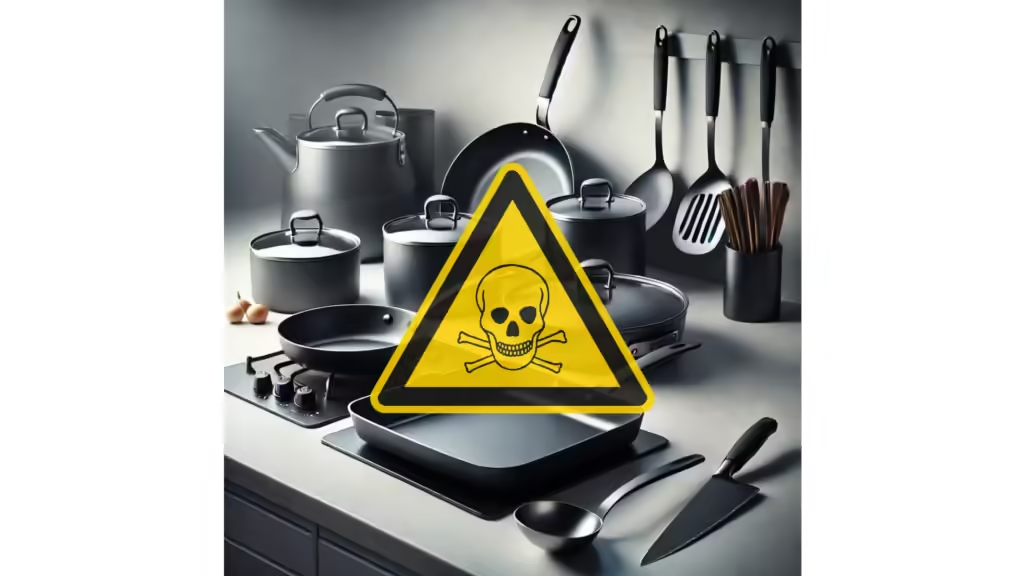
Non-stick cookware has been a kitchen staple for decades, making cooking and cleaning easier. However, recent studies suggest that these convenient pans might be toxic to your health. The chemicals used in non-stick coatings, such as Teflon (PTFE) and PFOA, have been linked to serious health risks, including hormonal imbalances, cancer, and respiratory issues.
If you’re using non-stick cookware daily, it’s time to reconsider your choices. In this article, we’ll explore why non-stick utensils are harmful and recommend safe and healthier alternatives to keep your meals chemical-free.Non-stick cookware has been a kitchen staple for decades, making cooking and cleaning easier. However, recent studies suggest that these convenient pans might be toxic to your health. The chemicals used in non-stick coatings, such as Teflon (PTFE) and PFOA, have been linked to serious health risks, including hormonal imbalances, cancer, and respiratory issues.
If you’re using non-stick cookware daily, it’s time to reconsider your choices. In this article, we’ll explore why non-stick utensils are harmful and recommend safe and healthier alternatives to keep your meals chemical-free.
Why Are Non-Stick Utensils Harmful?
Most non-stick cookware is coated with Polytetrafluoroethylene (PTFE), commonly known as Teflon. While Teflon itself is considered safe under normal cooking conditions, it starts to break down at high temperatures (above 260°C or 500°F), releasing toxic fumes.
Here’s why non-stick cookware can be dangerous:
☠️ 1. Release of Toxic Fumes
When non-stick pans are overheated, they emit perfluorooctanoic acid (PFOA) and other toxic gases. Studies show that these fumes can cause polymer fume fever (“Teflon flu”), leading to headaches, nausea, and flu-like symptoms.
☠️ 2. Cancer and Hormonal Disruptions
PFOA, a chemical used in the production of Teflon, has been linked to kidney cancer, testicular cancer, thyroid disorders, and hormone disruptions. Although PFOA has been phased out in many countries, some cheaper non-stick utensils may still contain traces of it.
☠️ 3. Scratched or Worn-Out Non-Stick Pans Release Chemicals into Food
Over time, the coating on non-stick pans scratches and chips off, potentially mixing with your food. While consuming small flakes of Teflon may not be immediately harmful, long-term exposure could pose serious health risks.
☠️ 4. Environmental Damage
The production and disposal of non-stick cookware contribute to environmental pollution. PFOAs and PTFE do not break down easily, contaminating soil and water, which affects wildlife and human health.
Best Non-Toxic Alternatives to Non-Stick Cookware
Switching to safer cookware can protect your health and the environment. Here are the best non-toxic cookware options that offer durability, even heating, and easy maintenance.
✅ 1. Cast Iron Cookware – The Ultimate Healthy Alternative
Why Choose Cast Iron?
✔️ 100% natural and chemical-free
✔️ Naturally non-stick when properly seasoned
✔️ Adds a small amount of iron to your food (great for those with iron deficiency)
✔️ Durable and can last for generations
Best For: Frying, baking, and high-heat cooking.
Recommended Product: The Indus Valley Super Smooth Cast Iron Cookware Set
✅ 2. Stainless Steel – Safe & Durable
Why Choose Stainless Steel?
✔️ Free from toxic coatings
✔️ Highly durable and rust-resistant
✔️ Does not react with acidic foods (like tomatoes and vinegar)
✔️ Easy to clean and dishwasher safe
Best For: Sautéing, boiling, and deep frying.
Recommended Product: Prestige Stainless Steel Cookware Set
✅ 3. Ceramic Cookware – Naturally Non-Stick
Why Choose Ceramic?
✔️ 100% toxin-free (lead and cadmium-free)
✔️ Naturally non-stick without harmful chemicals
✔️ Distributes heat evenly for better cooking results
Best For: Low to medium heat cooking, eggs, and delicate dishes.
Recommended Product: GreenPan Ceramic Non-Toxic Frying Pan
✅ 4. Clay & Earthenware Pots – Traditional & Healthy
Why Choose Clay Pots?
✔️ Retains natural flavors and nutrients
✔️ No synthetic coatings or harmful chemicals
✔️ Regulates moisture and heat evenly
Best For: Slow cooking, stews, and curries.
Recommended Product: Mitticool Clay Cooking Pot
✅ 5. Carbon Steel – The Lightweight Alternative to Cast Iron
Why Choose Carbon Steel?
✔️ Lighter than cast iron but just as durable
✔️ Develops a natural non-stick surface over time
✔️ Great for high-heat cooking and searing
Best For: Stir-frying, grilling, and baking.
Recommended Product: De Buyer Carbon Steel Pan